
Top 4 U.S. Labor Laws Protecting Your Rights – If You’re Facing Something Similar, You Need To Hire An Attorney
The founding fathers of United States of America had their disagreements on some things but on one point, they were all united; basic rights for the civilians and employees. As laborers or employees, we are those civilians whose rights were very important to our leaders but in the contemporary era, workers are not being treated adequately. Especially private firms or employers that hire personnel on contracts, do not treat them as per the labor law. So for all of you working guys out there, this article is going to discuss the top 5 labor laws protecting your rights. Come take a look.
Family and Medical Leave Act (1993)
The Family and Medical Leave Act (FMLA) gives permission to eligible and deserving employees to take unpaid leave for specific family, personal and medical reasons without the risk of losing their jobs and along with the continuation of their health insurance. This means that you are the liberty to take a leave from your company if you fall under the category as per described by the FMLA. Some examples are pregnancy, adopting a kid, serious or chronic illness and a military leave. Workers are allowed leaves which are worth 12 weeks of work in the event of all the situations mentioned above. According to FMLA, if you fall in one of these categories, you cannot be fired even if you take the leaves. As the FMLA is governed by Wage & Hour Division, there is no compromise on the basic salary that the government has described for you.
Occupational Safety and Health Act (1970)
This four decades old act was passed by the Congress in 1970 with the main purpose of employee safety in his/her workplace environment. It was made obligatory for employers to provide their employees with a clean environment that is free from known hazards, such as exposure to toxic chemicals, excessive noise levels which can prove harmful for the ears, mechanical dangers (caused by using machinery), heat or cold stress, or unsanitary conditions. Furthermore, this act was specifically designed for the private sector so that employees get amiable working conditions and their health is not compromised in any way. There are three rights under this act – right to know (information), right to file a complaint (against any hazards) and right to not be punished (if an employee exercise the right). Therefore, if any of you have suffered from safety hazards in your company, now might be the right time to call your attorney.
Age Discrimination in Employment Act (1967)
This act was specifically designed to help people above the age of 40 from any workplace harassment, discrimination on the basis of their age or a refusal to hire an employee because of their age. ADEA also give clear instructions about promotions and bonuses that are to be given on the basis of employee performance, not the age of the employee. If a 45-year old layman completes his tasks better than a 25-year old, he deserves a promotion. Furthermore, this act also protects the benefits of employees regardless of their age. Certain companies who don’t provide elderly employees the same benefits enjoyed by others are to be penalized under this act. According to the state, an employee who is officially registered as one, should enjoy the same rights and benefits as any other without the concept of age as a barrier. So it doesn’t matter if you’re above 40 and working; you deserve the same rights as everyone else on your level.
Title VII of the Civil Rights Act (1964)
Perhaps the act which is most required nowadays! Title VII of the Civil Rights Act clearly states that their should be no discrimination of any employee on the basis of gender, ethnicity, race, religion, place of birth etc. It opts for EEO (Equal Employment Opportunity) for all the employees with the merit being employee’s performance. A woman who has worked better than her male counterpart deserves the promotion first. It doesn’t matter that she’s a woman. Similarly, it doesn’t matter if you’re from India or Nigeria. If you have worked properly, you deserve the recognition irrespective of your nationality. We are facing so much misogyny, xenophobia and racism in corporate culture at the moment that we’ve ignored this critical Civil Rights Act. Therefore, anyone facing such discrimination should be ready with a lawsuit against his or her employers.
More in Labor law
-
`
 90 Years Later, the NLRA Faces New Threats to Labor Rights
In July 1935, Congress passed a law that reshaped America’s labor system. The National Labor Relations Act (NLRA), also known as...
July 17, 2025 -
`
 Why More Families Are Ditching the Courtroom in Divorce Cases
Breaking up may never be painless, but it’s becoming far less public, expensive, and combative—especially for separating couples in England and...
July 9, 2025 -
`
 Meet the Creator Turning Celebrity Court Cases into Must-Watch TikToks
Melanie Goolsby never intended to become a voice for courtroom clarity. Yet, in just a few years, she’s emerged as a...
July 4, 2025 -
`
 Flight Attendants Face New Sick Leave Rules After United’s Arbitration Win
United Airlines has secured a significant legal win, allowing it to enforce stricter sick leave rules for flight attendants on weekends....
June 25, 2025 -
`
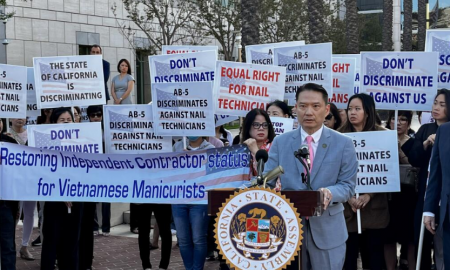 Vietnamese Nail Salons Sue California Over Labor Code Changes
For decades, Vietnamese-owned nail salons have been central to California’s beauty industry, especially in areas like Orange County. But now, several...
June 18, 2025 -
`
 New Colorado Guide Sheds Light on Child Custody and Abuse Allegations
When it comes to legal battles involving children, nothing raises the stakes like cases tied to domestic violence. In Colorado, family...
June 11, 2025 -
`
 Kim Kardashian Isn’t Alone—The Wild History of Celebs Dressing for Court
Kim Kardashian’s recent courtroom appearance in Paris didn’t just spark headlines—it sparked conversations. At the center of one of the most...
June 5, 2025 -
`
 AAA Consumer Arbitration Rules Update (And It’s Impact on Businesses)
The American Arbitration Association (AAA) has introduced notable changes to its Consumer Arbitration Rules and Mediation Procedures, effective May 1, 2025....
May 29, 2025 -
`
 The Growing Trend of Celebrity Court Style – What’s the Appeal?
Celebrities often know how to make headlines, whether it’s for their red carpet moments or legal battles. Now, their courtroom appearances...
May 17, 2025
You must be logged in to post a comment Login